
skip to Main Content

MedTech UX

MedTech UX

This is a UX design demonstration, not a client case study.

Successful healthcare experiences occur when information supports care rather than competes for attention. This demonstration explores AI-assisted clinical interfaces designed for clarity, efficiency, and patient-centered care.

I Can Explain

Designing Healthcare Experiences Around Clarity, Efficiency, and Patient Care

Healthcare professionals often have to understand a lot of information very quickly. My approach starts by asking what they need to
recognize first, what can wait, and how the interface can make those decisions easier under pressure.
That means designing experiences where:
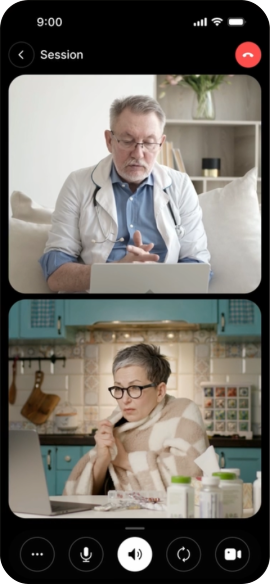
How I think of all systems is explained atomically in my

Design System Demonstration.
View Demo
Clarity & Confidence

Critical information can be recognized quickly without searching through the interface.

Clinical Accuracy

Clinical accuracy is supported without adding unnecessary cognitive burden.

Patient-Centered Hierarchy

Patient information is organized around clear priorities and the immediate care context.

Calm, Predictable Interactions

Interactions remain calm, predictable, and understandable during both routine and critical moments.

The goal isn’t simply to display clinical information. It’s to create an environment that helps healthcare professionals understand what is happening and determine what needs their attention next.

Applying Information Architecture to Clinical Systems

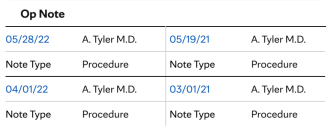
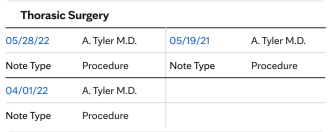
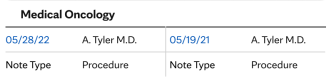
Healthcare systems contain layers of information such as vitals, medications, treatment history, alerts, notes, care events, and operational data. Showing everything at once doesn’t make that information more useful. I use information architecture to determine what should be visible immediately, what should remain accessible in context, and what can be progressively revealed when it’s needed.
In practice, that means:
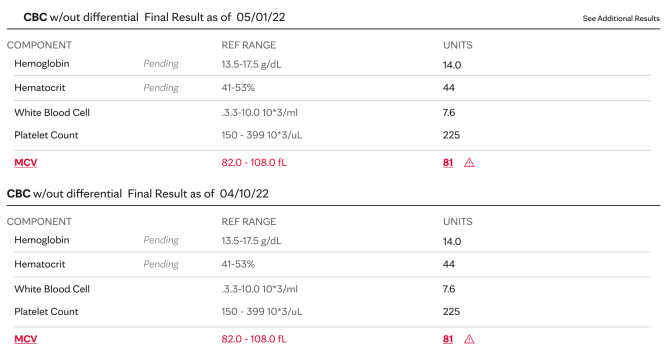
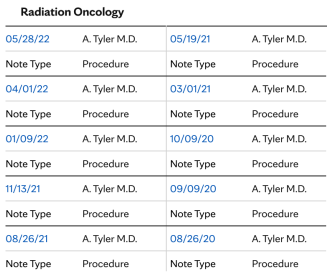
Clarity & Confidence

Elevating clinically urgent information before supporting details.

Contextual Organization

Organizing vitals, medications, treatment history, care timelines, and alerts around their relevance to the current task.

Workflow Continuity

Preserving context as clinicians move between patients, departments, and care activities.

Progressive Disclosure

Using hierarchy and progressive disclosure to reduce unnecessary scanning and cognitive load.

The goal isn’t simply to display clinical information. It’s to create an environment that helps healthcare professionals understand what is happening and determine what needs their attention next.

Integrating AI-Assisted Clinical Support Systems Into Clinical Workflows

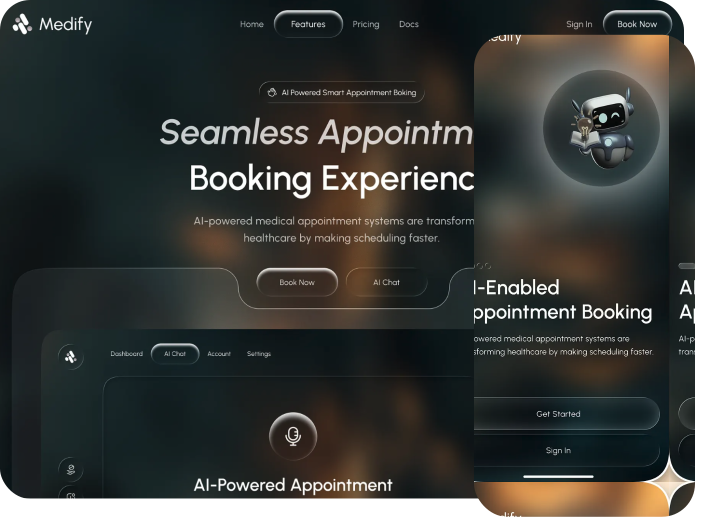
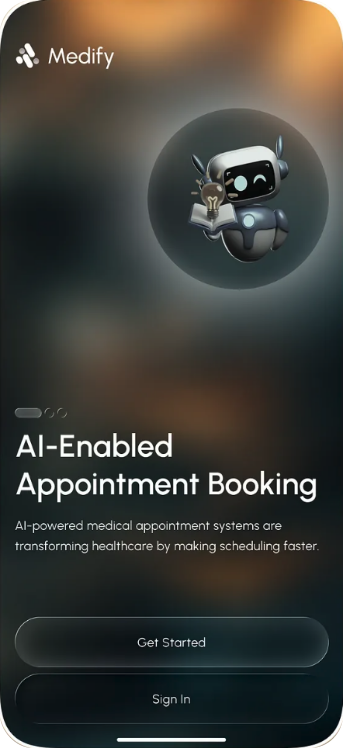
I don’t think AI should become another layer clinicians have to manage. It should help them interpret what’s already happening within the workflow.
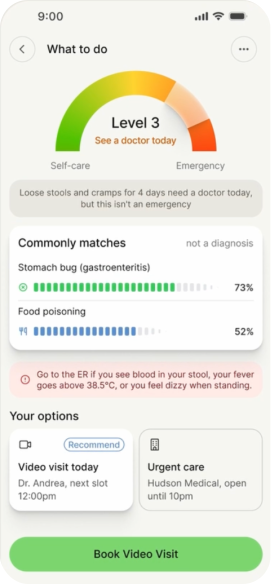
I approach AI-assisted clinical experiences as a continuous sequence: the system analyzes changing information, surfaces something meaningful, explains why it was surfaced, and leaves the clinical decision with the healthcare professional.
That can include:
Information Prioritization

Elevating clinically urgent information before supporting details.

Contextual Organization

Organizing vitals, medications, treatment history, care timelines, and alerts around their relevance to the current task.

Workflow Continuity

Preserving context as clinicians move between patients, departments, and care activities.

Progressive Disclosure

Using hierarchy and progressive disclosure to reduce unnecessary scanning and cognitive load.

But the AI should never become a black box. Clinicians should be able to understand the evidence behind a recommendation, review it, modify it, dismiss it, or act on it themselves. The goal is AI that supports clinical judgment rather than replacing it.

Reduce Friction Through Healthcare UX

AI-Powered Insights

Use intelligent systems to surface patterns and support faster decisions.

Proactive Assistance

Detect risks, identify opportunities, and deliver timely financial guidance.

Decision Support

Enhance visibility with AI while preserving user control and trust.

Transparent Intelligence

Deliver contextual recommendations that feel clear, helpful, and human-centered.

Conclusion

Healthcare UX works best when the technology gets out of the way of the care being delivered. Throughout this demonstration, I’ve focused on organizing complex information, reducing cognitive load, supporting clinical workflows, and using AI to surface meaningful insights without taking control away from the clinician.

For me, the goal isn’t to make healthcare technology feel more complex or intelligent. It’s to make the experience feel clearer, more useful, and easier to trust so healthcare professionals can spend less time managing the interface and more time focused on the patient.

Back To Top