
Jon Hill
AI-Native Product Design | Systems UX | Adaptive Experiences | View Resume
I design complex digital products across enterprise and consumer platforms, using AI as a decision-support tool to improve clarity, scale, and user outcomes.
With 13 years of experience, I lead scalable digital product initiatives through UX research, design systems, and thoughtful decision-making.

Centene Corp
Centene Corp
At Centene, I led UX strategy and product design across complex healthcare experiences supporting large-scale member and internal business needs. My role went beyond designing interfaces—I worked across product, engineering, research, and business teams to turn complicated requirements into experiences people could understand and use.
Role:
Senior UX Product Designer
Environment:
Enterprise Healthcare
Focus:
UX Strategy · Product Design · Accessibility · Cross-functional Collaboration · Design Systems
The Challenge Was Bigger Than the Interface
Healthcare products come with layers of complexity from federal requirements and accessibility standards to technical constraints, changing priorities, and the needs of people from different backgrounds. Solving the UX problem often meant understanding how those factors affected both the experience and the team responsible for delivering it.
Healthcare products come with layers of complexity from federal requirements and accessibility standards to technical constraints, changing priorities, and the needs of people from different backgrounds. Solving the UX problem often meant understanding how those factors affected both the experience and the team responsible for delivering it.

Each challenge required a different response that resulted in a consistent outcome, successful delivery.
Focusing on understand what had changed, determine what the team and users needed most, and create a clear path forward without losing sight of the experience we were trying to deliver.
Design System
Challenge
The design system had inconsistencies across existing assets, while accessibility requirements meant that simply standardizing what already existed wasn’t enough. Patterns needed to become more consistent while continuing to support the needs of a large healthcare product environment.
My Approach
The design system had inconsistencies across existing assets, while accessibility requirements meant that simply standardizing what already existed wasn’t enough. Patterns needed to become more consistent while continuing to support the needs of a large healthcare product environment.
What This Demonstrated
This work strengthened my systems thinking. I wasn’t only asking whether a design worked for the screen in front of me, I was considering how the decision would behave across the larger product ecosystem.
Introduction to Centene

BUTTON
My First Project Was The

Starting with the team’s current design system helped me quickly learn design patterns and ensure consistency.
BUTTON
Design System
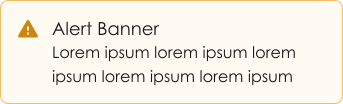
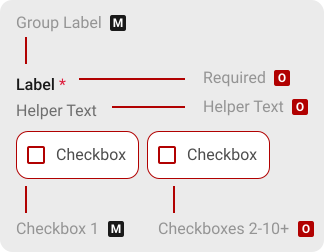
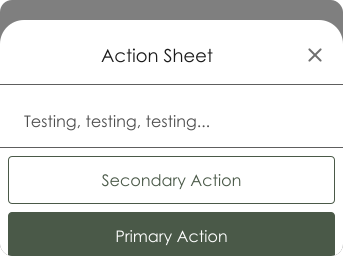
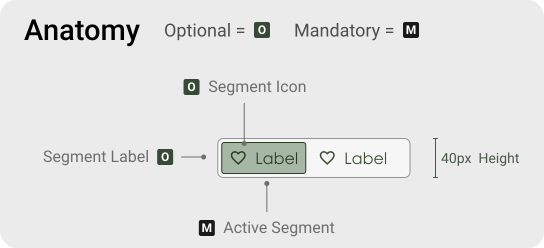
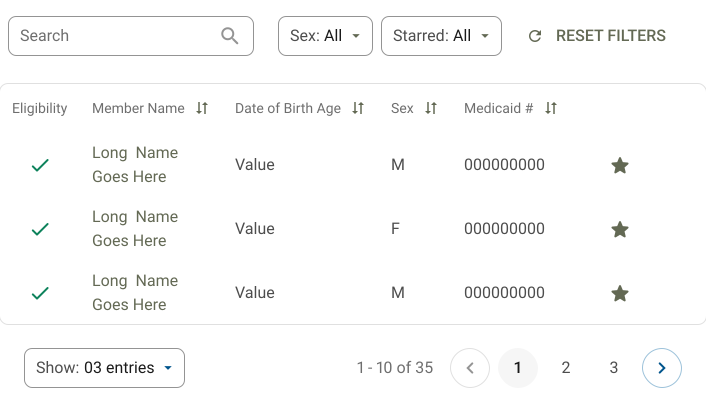
My initial tasks at Centene involved designing components for the design system that were assigned to their backlog.
BUTTON
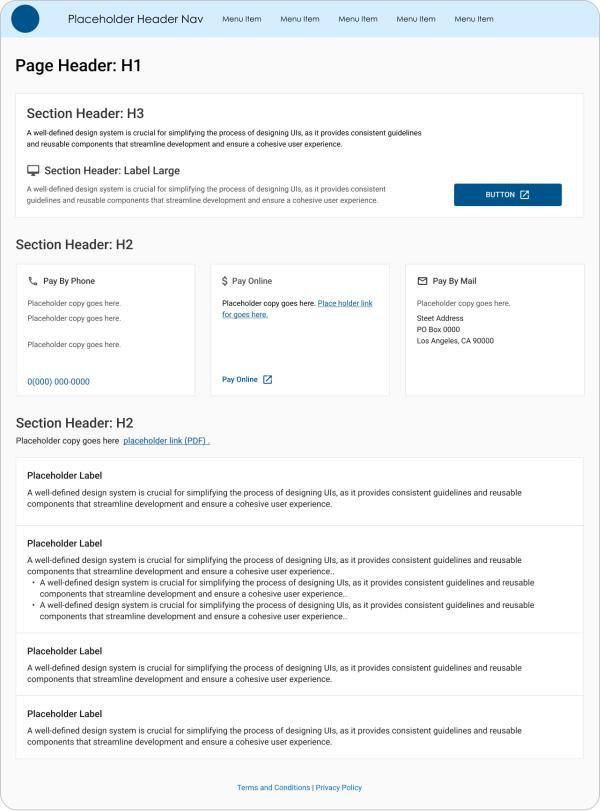
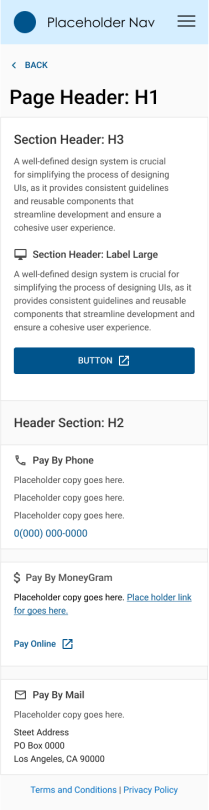
New Consumer Facing Payment Page
Challenge
I was still new to the team when I was asked to design a consumer-facing payment experience with federal and accessibility requirements. My biggest challenge was learning the existing design patterns while designing the product, so the experience didn’t feel disconnected from the rest of the ecosystem.
My Approach
Rather than designing the payment experience in isolation, I used existing products, established patterns, team knowledge, and feedback to understand how the experience should behave. As I learned the system, I applied those patterns to the payment flow while determining where the new experience required something different.
What This Demonstrated
This project taught me how to design effectively while still learning an established product ecosystem. Instead of allowing what I didn’t know to slow the work down, I used the existing products, patterns, and knowledge of the team to learn quickly and make more informed design decisions.
Adapting Through Change
Challenge
Reorganization changed team responsibilities while active projects still had deadlines to meet.
During an RBAC initiative and team launching the entire system in a new platform, significant technical changes affected the design, but the delivery timeline remained the same.
My Approach
As usual, my first thought is to assess everything and empathize with departed team members while building a lost of what projects will be impacted.
Focusing on the changes, what remained valid, and the team needs to keep progressing. Emphasizing flexibility, I adapted the work around the new constraints and prioritized the decisions that mattered most.
 What I Took From Centene
Everything.
Centene strengthened how I work inside complex product environments. I learned that difficult UX problems aren’t always solved by designing more; they’re often solved by understanding the right problem, creating alignment earlier, and anticipating what users, stakeholders, and the team will need next.
My role grew from designing experiences to helping teams navigate the complexity surrounding them. That evolution continues to shape how I approach product design today. Most importantly, I improved at listening, empathizing, understanding how people communicate, and being patient.