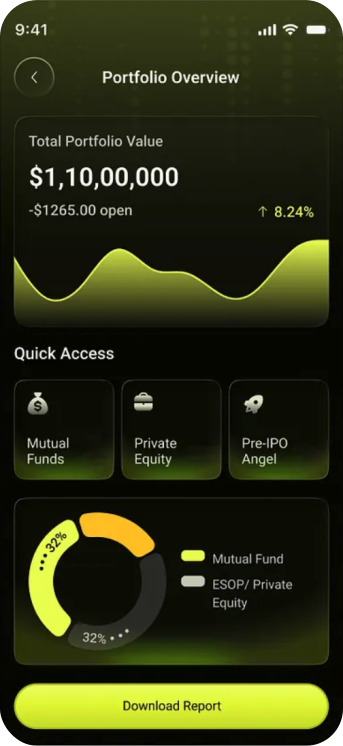

I design complex digital products across enterprise and consumer platforms, using AI as a decision-support tool to improve clarity, scale, and user outcomes.
With 13 years of experience, I lead scalable digital product initiatives through UX research, design systems, and thoughtful decision-making.

How I think and work.
Skills
Explore the skills, tools, and methods I use to design thoughtful, scalable, and user-centered experiences.
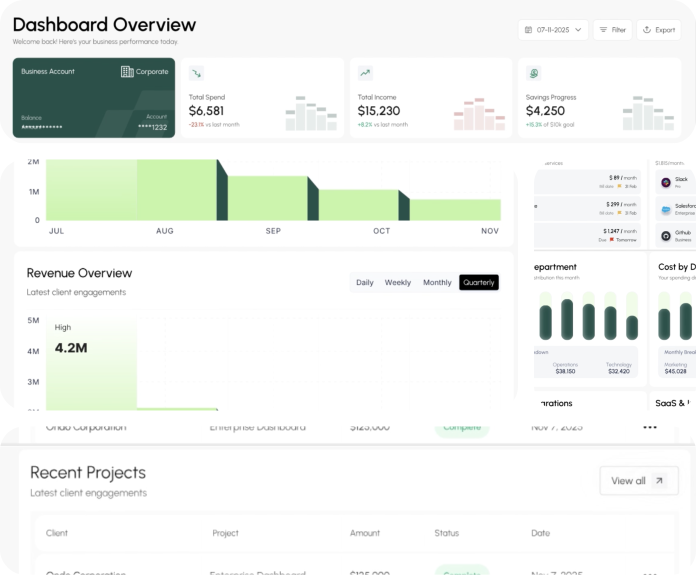
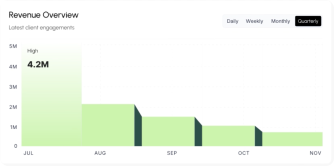
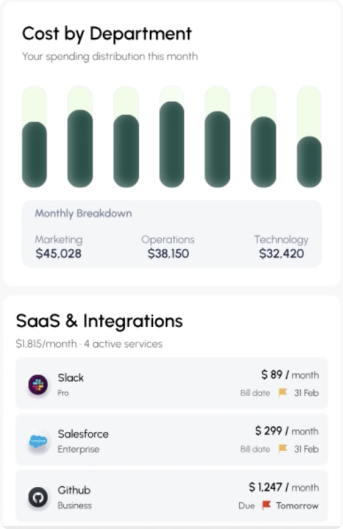
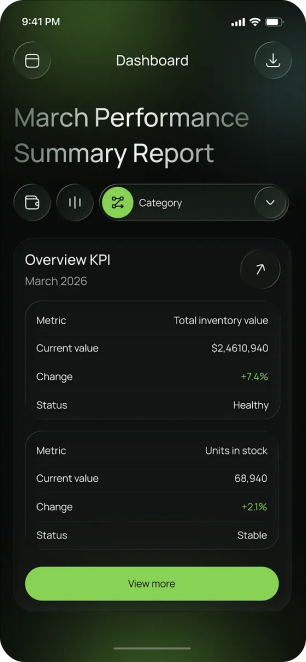
This is a UX design system demonstration, not a client case study.
Successful financial products are built on trust, clarity, and confident decision-making. This demonstration showcases my understanding of FinTech UX through AI-assisted interfaces designed to simplify complex financial experiences.
Financial decisions depend on clear, accurate, and trustworthy information.
Financial Visibility
Users need immediate insight into balances, transactions, investments, and risk.
Structured Workflows
Organized interfaces reduce uncertainty and simplify complex financial tasks.
Trustworthy Experiences
Financial products should feel stable, responsive, and dependable in every interaction.
Applying Information Architecture to Financial Systems
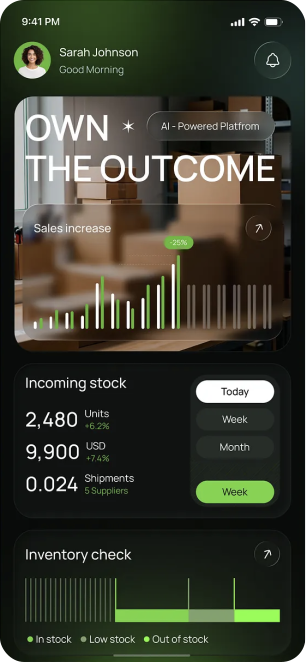
Information Prioritization
Organize complex financial data for immediate understanding.
Financial Hierarchy
Prioritize accounts, transactions, spending, investments, and risk.
Actionable Insights
Present financial data in ways that are easier to interpret and act upon.
Focused Attention
Guide users through information with clarity and minimal cognitive effort.
Integrating Intelligent Systems Into Financial Decision Workflows
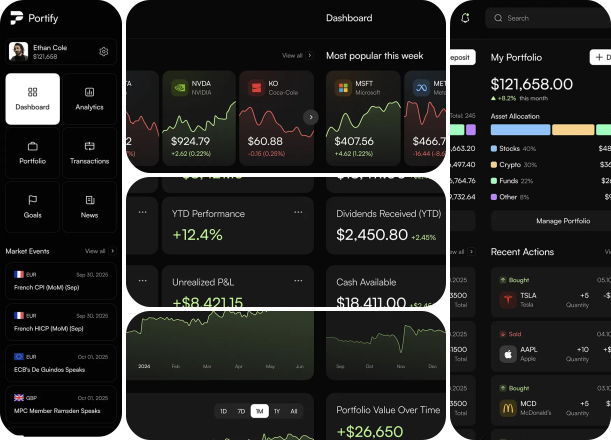
AI-Assissted Insights
Use intelligent systems to surface patterns and support faster decisions.
Proactive Assistance
Detect risks, identify opportunities, and deliver timely financial guidance.
Decision Support
Enhance visibility with AI while preserving user control and trust.
Transparent AI
Deliver contextual recommendations that feel clear, helpful, and human-centered.
Decision Support
Enhance visibility with AI while preserving user control and trust.
Transparent AI
Deliver contextual recommendations that feel clear, helpful, and human-centered.
Reducing Friction Through Financial UX
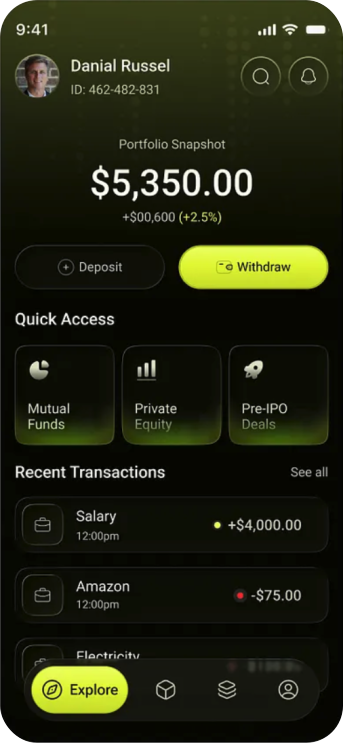
Simplify complex financial tasks through intuitive layouts that build trust and reduce friction.
Support confident decision-making with responsive interactions, clear feedback, and purposeful guidance.
Organize financial information through thoughtful hierarchy and visualization for faster understanding.
Final Thoughts
Designing effective financial experiences requires more than presenting numbers on a screen. It requires understanding which information matters, how users make decisions, and where complexity can be reduced without removing the context they need. Through information architecture, intentional hierarchy, intelligent systems, and focused interaction design, I approach FinTech UX with one goal: make complex financial information easier to understand, navigate, and act on with confidence.